Denton County, Texas
A dated timeline of Denton County, Texas
The first families came to the Blackland Prairie before there was a county to live in. They cleared land, built cabins, and waited for a government to catch up with them. This timeline follows Denton County from that early settlement through county organisation, the arrival of the railroads, the cotton years, and the growth of its towns, with the dates the record gives us. It answers one reader question in particular: when did the key events in Denton County happen?
- County organised
- 1846
- Earliest record read
- 1840s
- Latest record read
- 1920
The dated ledger
1920s
Dated 1920
Twentieth century
-
What the county's surviving collections hold and how to read an exhibit
County collections look modest from the doorway: a few cases, a wall of framed photographs, a shelf of ledgers.
PHOTOGRAPH8 min read

Denton CountyPresent dayOBJECTGlass case holding a folded quilt, a closed ledger and a framed photograph

1910s
Dated 1911
Twentieth century
-
Census returns and cemetery lists as evidence
Every family historian working in Denton County runs into the same fork in the road: a federal census return that lists a household, and a gravestone inscription that names the same people differently.
CEMETERY7 min read
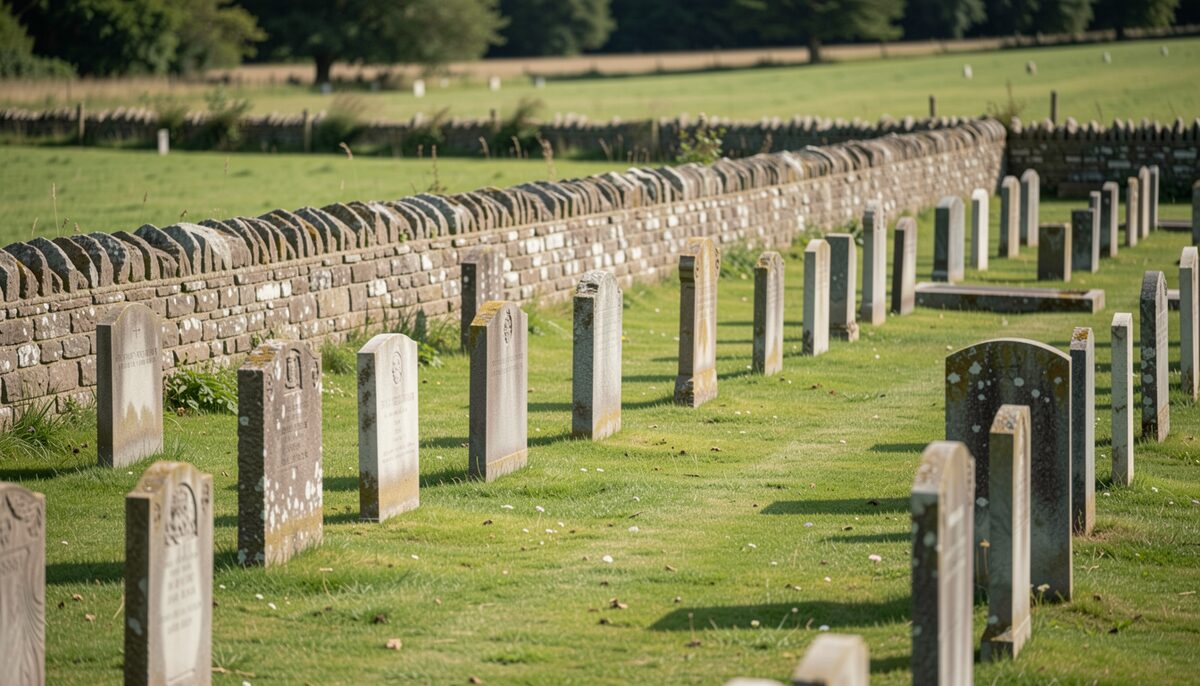
Denton CountyPresent dayLANDSCAPEWeathered headstones in a fenced rural cemetery, low stone wall behind

1880s
Dated 1885, 1880
Railroads and cotton years
-
Reading deed and probate records in Denton County
The courthouse square in Denton has watched a hundred thousand land transactions pass across its counters, and every one of them left a paper trail.
PROBATE8 min read
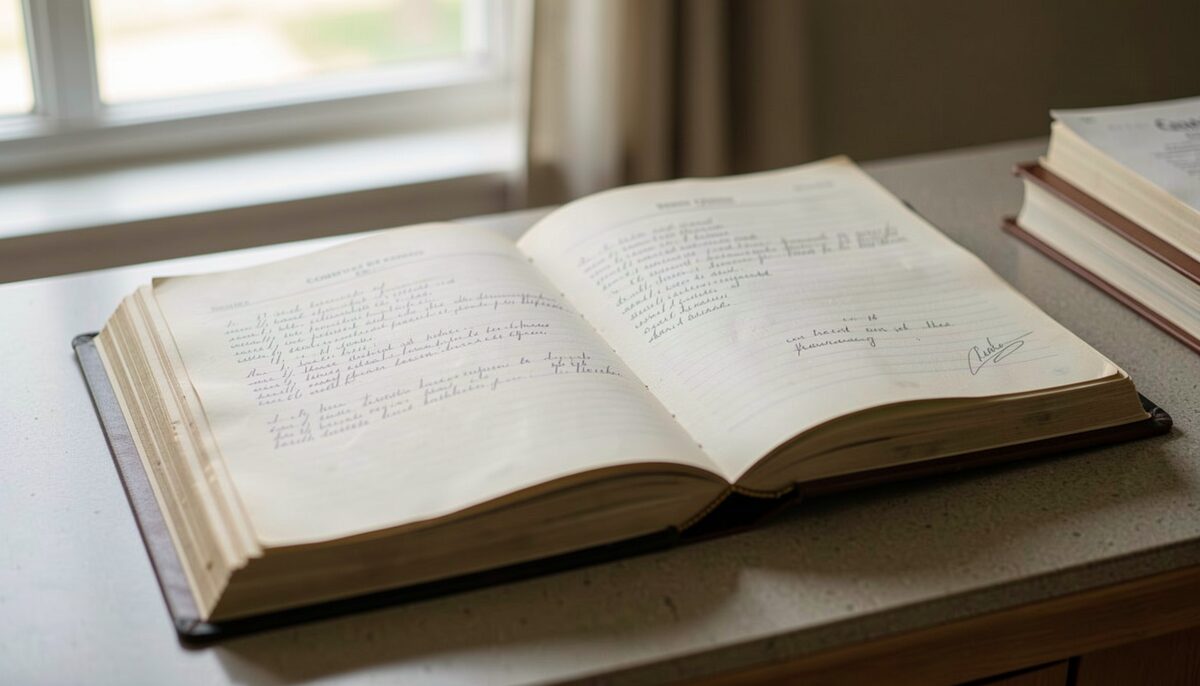
Denton CountyUndated sceneDOCUMENTHeavy bound deed volume open on a counter, faded handwriting on ruled pages -
The books that carry Denton County history and how to judge a local history reprint
You walk into an estate sale north of the square and find a shelf of local histories, most of them thin paperbacks with brown covers.
PUBLISHED BOOK7 min read

North TexasUndated sceneOBJECTStack of cloth-bound local history books, one open with a paper marker


1870s
Dated 1878, 1870s
Railroads and cotton years
-
Reading Denton County records: deeds, probate, census and cemeteries
A courthouse fire, faded ink, a clerk's handwriting: every Denton County record reaches you through some filter, and part of the family historian's work is deciding what each document can actually prove.
CENSUS8 min read
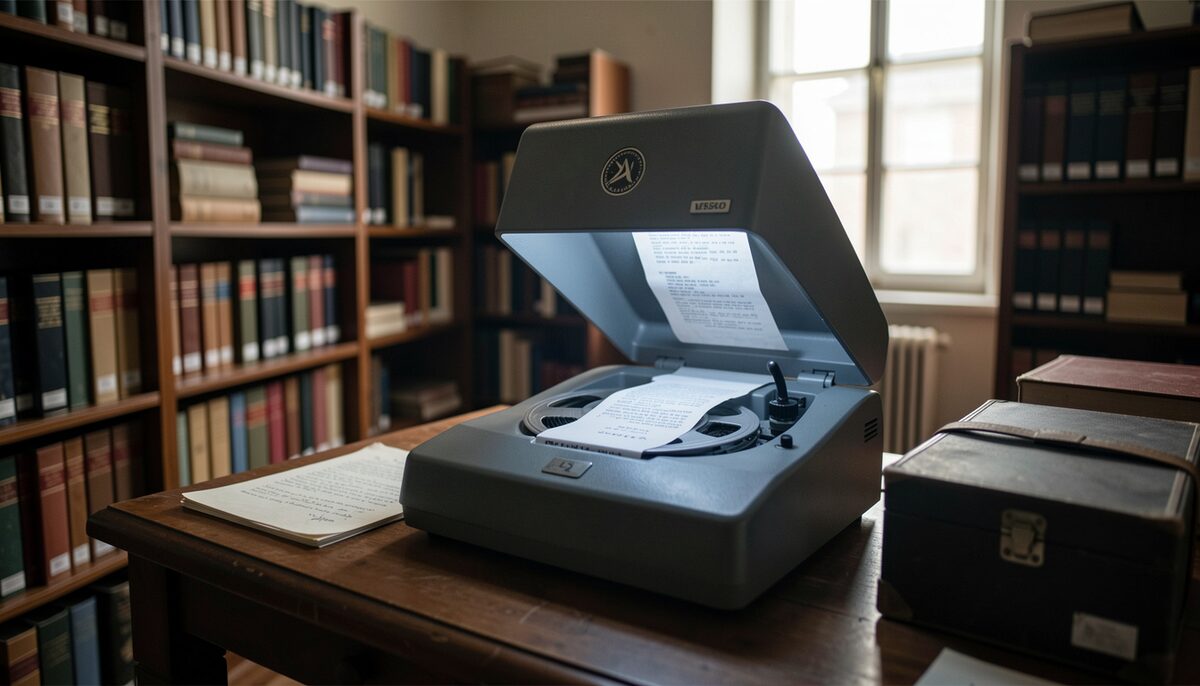
Denton CountyPresent dayOBJECTMicrofilm reader glowing in a dim archive room, reel box and notepad -
Where Denton County is: boundaries, towns, roads and neighbouring counties
Denton County sits in North Texas, on the northern edge of the Dallas-Fort Worth metroplex, and its shape has been redrawn more than once since the first surveyors ran their lines.
MARKER FILE7 min read
Denton CountyPresent dayOBJECTFolded paper county map spread on a truck hood beside a steel thermos


1860s
Dated 1860
County organisation and the square
-
The shape of Denton County: Blackland Prairie, Cross Timbers and county lines
Ask what Denton County looks like and many people reach for a road map, tracing the square-ish outline that sits one county south of Oklahoma.
MARKER FILE10 min read
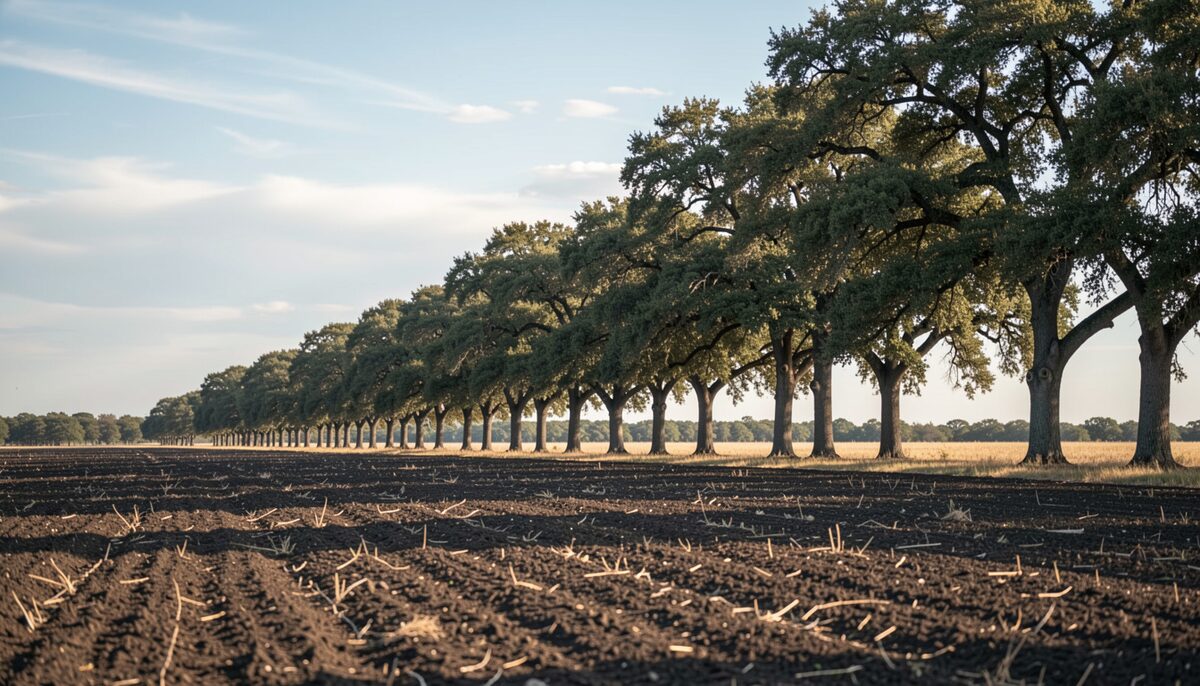
Denton CountyUndated sceneLANDSCAPEPloughed prairie soil running to a line of bare post oaks

1850s
Dated 1850
County organisation and the square
-
Denton County history: towns, squares and settlement
Every Denton County town began as a decision about water, timber and a road.
CENSUS7 min read
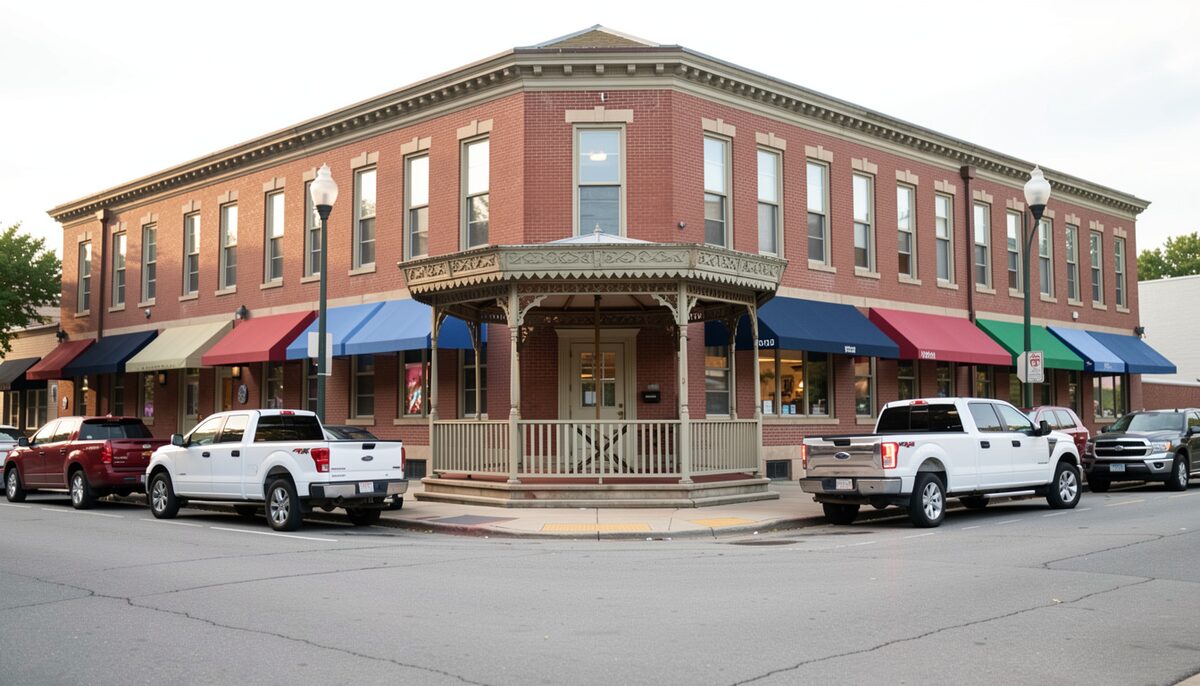
Denton CountyPresent daySTREETCourthouse square from the corner, shop awnings and two parked pickups

1840s
Dated 1840s
Settlement before county organisation
-
Pioneer settlement on the Blackland Prairie
Families who came to Denton County in the middle of the nineteenth century did not arrive in a finished town.
DEED7 min read
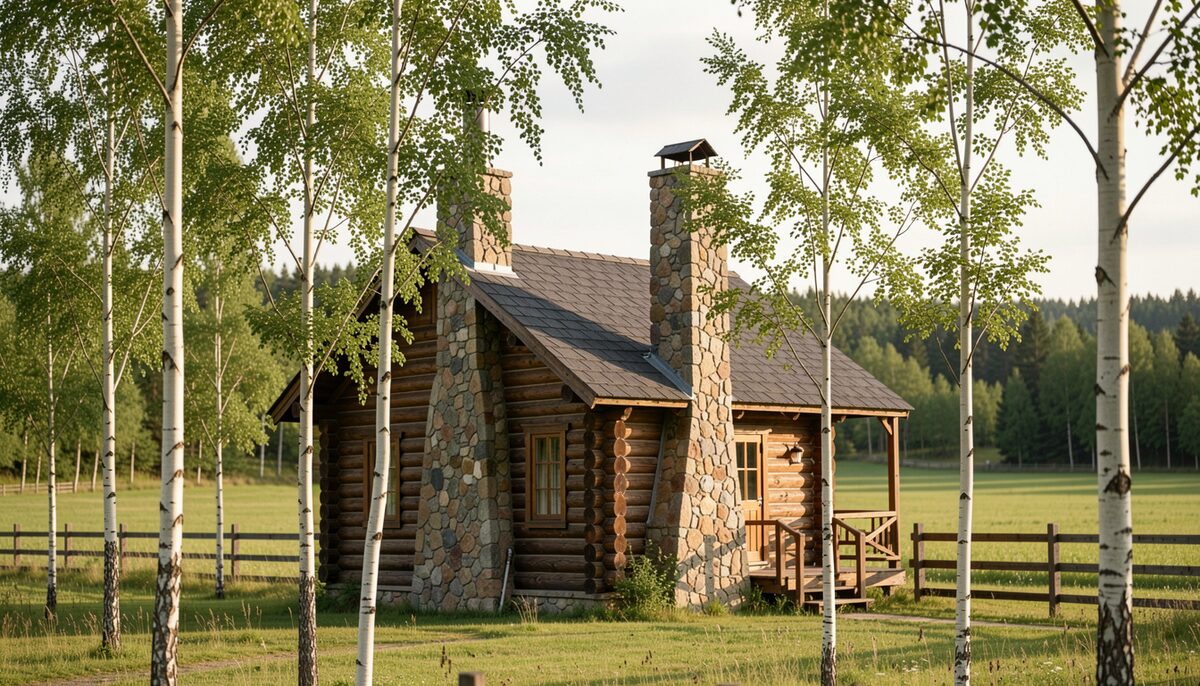
Denton CountyUndated sceneOBJECTSingle-pen log cabin with a stone chimney among young trees, split rails

Filed this month, waiting on a document date
These entries were written this month from pages published by the bodies that hold the county's paper: the Texas State Historical Association, the Texas Historical Commission, the National Archives and the Portal to Texas History. None of them rests on one dated document, so they sit outside the decades above and are listed here under the section they belong to.
North TexasPresent daySTREETWeathered board barn behind a wire fence beside a road curving between bare pecan trees Places and MapsThe Denton County towns that fell off the map
North TexasPresent daySTREETLow stone wall along a curved path, staked saplings and a brick building behind Places and MapsQuakertown: a Denton community and its removal
North TexasPresent dayOBJECTMicrofilm reader on a reading-room table, notepad and pencil beside it Records and ResearchDenton County newspapers, on film and on screen
North TexasPresent dayOBJECTStone marker post with a blank bronze plate beside a wire fence and a ploughed field Records and ResearchReading a Texas Historical Commission marker file
North TexasPresent dayOBJECTOpen box of black and white photographs, cotton gloves and a print on a table Records and ResearchWhere Denton County photographs and negatives sit today
North TexasPresent daySTREETSmall white schoolhouse with a bell tower alone in mown grass between fenced fields Music and CommunityWhat survives from Denton County's early schools
North TexasPresent daySTREETThatched brush arbour among live oaks, a slatted bench on the ground in front Music and CommunityChurch minutes and camp meeting notices
North TexasPresent dayDOCUMENTThick cloth-bound volume on a table beside a folded sheet and a pencil Records and ResearchCensus years and a county that moved its lines
North TexasPresent daySTREETWeathered board barn behind a wire fence beside a road curving between bare pecan trees Places and MapsAntique Maps and the History of Cartography


Filed September 16, 2026. A correction sent in writing is dated on the line it changes, at the contact page.
The desk itself, undated
These pages are about the publication, not about the county. No document dates them, so they sit outside the ledger.

North TexasUndated sceneDOCUMENTOpen notebook of handwritten citations, a pencil and reading glasses EDITORIAL PAGEAbout this publication and how it works
North TexasUndated sceneDOCUMENTBlank correspondence card and a fountain pen on a desk by a window EDITORIAL PAGEContact the editors- EDITORIAL PAGELegal notice


Written by the Blackland Chronology editorial team. Write to contact@dentoncountyhistoricalmuseum.com.

The square, the prairie and the paper
Everything filed on this site belongs to one county and to the documents that describe it.
Denton County is the subject: the courthouse square and the town around it, the rail towns, the farms and the rural schools. Reading Denton is the method: deeds, probate files, census returns and cemetery lists, and what each of them can and cannot carry.
Here is what this desk refuses to do: treat a cemetery list as a birth record. A stone gives the date someone chose to carve, sometimes decades after the death, and the county clerk’s office does not publish a page reconciling those stones with its own returns. Read the stone as testimony about a family, not as evidence about a year.
The Record Ledger: what each kind of record proves
Eight kinds of record carry almost everything written on this site. Each one is listed here with what it proves, what it does not prove, and where it is held today. Read the middle line first: it is the line that saves months.
- DEED
- What it proves
- Who held a piece of land, from what date, and what the clerk entered in the county deed book.
- What it does not prove
- That the person named was the first owner, or that the boundary described on the page matches the fence on the ground today.
- Where it is held
- Denton County Clerk, deed records. County-level finding aids are held by the Texas State Library and Archives Commission. Read the article
- PROBATE
- What it proves
- That a court took charge of an estate, appointed an administrator and listed what the person left behind.
- What it does not prove
- That the inventory was complete, or that every heir named in the file was a child of the deceased.
- Where it is held
- Denton County Clerk, probate files, in the county records the clerk keeps. Read the article
- CENSUS
- What it proves
- That a household was counted on a given day, with the names the enumerator wrote at the door.
- What it does not prove
- That the ages are right, or that two people listed in one house were related to each other.
- Where it is held
- FamilySearch and the National Archives; the Portal to Texas History at the University of North Texas holds Texas copies. Read the article
- CEMETERY
- What it proves
- That a stone stands in a named burial ground with a name and dates carved on it.
- What it does not prove
- That the carved dates match a birth or a death return, or that one plot records a whole family.
- Where it is held
- Cemetery associations and county cemetery lists; the Texas Historical Commission holds marker files. Read the article
- NEWSPAPER
- What it proves
- What a paper printed on a dated page, including notices, land sales and reports from a town.
- What it does not prove
- That the printed account is accurate, or that the paper covered everyone in the county.
- Where it is held
- The Portal to Texas History at the University of North Texas; the Texas Almanac for county summaries. Read the article
- MARKER FILE
- What it proves
- That the Texas Historical Commission accepted a marker application for a site, with a subject and a date.
- What it does not prove
- That every statement in the application was checked against a record, or that the site still stands.
- Where it is held
- Texas Historical Commission, marker files. Read the article
- PHOTOGRAPH
- What it proves
- What stood in front of the camera at one moment, and how a place was framed.
- What it does not prove
- Who is in the frame, when the shutter opened, or what happened outside the crop.
- Where it is held
- The Portal to Texas History at the University of North Texas, and county collections. Read the article
- PUBLISHED BOOK
- What it proves
- What a named author printed, with a date and a publisher, about a subject the title states.
- What it does not prove
- That the author read the original record, or that a reprint carries the corrections of the first edition.
- Where it is held
- The Texas Almanac; county libraries; the Portal to Texas History at the University of North Texas. Read the article
The same eight labels are used on every entry in the ledger and under the title of every article, so a reader who has read this table once can read the whole site.
The timeline in detail
Why a timeline helps when the dates are scattered
Family historians usually meet Denton County one record at a time. A deed here, a probate file there, a newspaper notice with no clear year attached. Set those same events against a dated sequence and the gaps start to speak. You see why a family sold out in the 1870s, or why a town that looked permanent on an 1860 map had thinned to a store and a church by 1890. The Blackland Chronology keeps Denton County history, towns, and the records that document them in view, and a timeline is the simplest frame for all three.
For anything this page cannot date, the Texas county history archives hold the digitised newspapers, maps, and documents that often can. The dates below are the ones the record states plainly; where a date is contested or simply absent, the entry says so and stops there.
Settlement before county organisation
The first wave of settlers reached the Blackland Prairie in the 1840s, arriving from the older counties to the east and south. They chose sites by water and by soil: the prairie's dark, waxy earth grew cotton and corn, but it needed ploughs strong enough to break it. Clearing a farm meant cutting post oak and blackjack on the Cross Timbers fringe where the prairie met the woodland, then working the open ground. The magazine's entry on pioneer settlement on the Blackland Prairie follows those first families and the land they cleared.
When did Denton County become a county?
The Texas legislature created Denton County in 1846, the same year Texas entered the Union as a state, and named it for John B. Denton, a preacher and soldier killed in 1841. The county had no courthouse at first and no fixed seat; business was transacted from wherever a clerk could keep a book dry. Organisation came in the following years, as commissioners were named, precincts were drawn, and the county government found a permanent home. Denton County dates its founding to that 1846 act, and later county records run back to the terms of the earliest officials.
Land, deeds, and the paper trail
Nothing shaped early Denton County more than land, and nothing documents it better than the county clerk's books. Every sale, every mortgage, every disputed boundary left a deed behind. Estates passed through probate, and probate files name heirs, ages, and property in terms that census returns rarely match. A reader who wants to date a family's arrival should start where the magazine points: Reading Deed and probate records is the work behind most of the dates on this page, because the original instruments were written in the same decade the events happened.
The town of Denton and its square
The town of Denton grew up around its courthouse square, and the square's records are the spine of the county's history. Merchants built frame stores facing the square, lawyers and clerks took rooms above them, and the public well or cistern stood where the roads met. The square also hosted markets, musters, and court days, when the whole county seemed to gather at once. The magazine's article on the town of Denton's beginning traces the founding of the seat and the layout of the square, which is still the best surviving guide to how the early town was organised.
Families in the surrounding countryside came to town for the county court, for merchandise, and for the schools and churches that clustered near the square. Those trips left names in hotel registers and store ledgers, and those ledgers survive in private hands and repositories across the county.
How did the railroads redraw the map?
The railroads arrived in the 1870s and 1880s, and they did more to reorder Denton County's map than any other event of the century. Lines pushed north from Dallas and west from the older settlements, and towns that sat on the rails grew while towns left a few miles aside often faded. New towns were laid out with a depot as the anchor and the square second in importance. Grain, cotton, and cattle moved by rail, and so did people: a farmer could ship a crop and return the same day. The magazine's entry on Towns They describes the arrival of the rail lines and how local places changed around them.
Cotton years on the Blackland Prairie
By the 1880s cotton had become the county's leading cash crop, and the gins, compresses, and cotton yards clustered near the rail depots. The work ran in an annual rhythm: preparing ground in spring, chopping and picking through the summer and autumn, then hauling the crop to the gin. Tenant farming and sharecropping spread through the same decades, and many families moved every year or two, following the best land and the best terms. Cotton money built brick storefronts on the squares and paid for the church buildings and schoolhouses that still stand on the prairie.
What older life does the record preserve?
Between the cotton seasons, church, school, and music filled rural life, and the records of all three survive fitfully. Singing schools, shape-note singing, and lessons on the Mountain Dulcimer appear in local accounts and photographs, and they date the social world that cotton alone does not. A photograph of a quilting, a picnic, or a singing convention often carries the only surviving likeness of a family whose deed and census entries are otherwise bare. The magazine covers the musical side of that old life directly.
Towns, schools, and the twentieth century
The county's towns continued to grow into the early twentieth century, and consolidated school districts replaced the one-room schoolhouses that had dotted the prairie. Paved roads followed, then the highways that linked Denton to Dallas and Fort Worth, and the small farm towns settled into the quieter role they hold today. Each change left its own records: school census lists, district minutes, road petitions, and the photographs of graduating classes. Those records matter to genealogists because they name children, teachers, and neighbours in ways that unindexed deeds never do.
The records that carry the timeline forward
A dated entry is only as good as the documents behind it, and the county's documents are spread across several kinds of repositories. The Portal to Texas History gathers digitised newspapers, maps, photographs, books, and legal documents from partners across the state, and its collections can be searched by location, partner, subject, and date. The county clerk's deed and probate books, the tax rolls, and the local newspapers remain the strongest sources for individual families, and they reward a reader who works from the dated entries outward rather than from a single document alone.
If you can fix one date in a family's Denton County history, you can usually fix others around it: a deed records a purchase, a probate file names heirs, a newspaper notice names a town and a street. Start with the event you can prove, write it down with its date, and read outward from there. The rest of the chronology will follow.
About the source The Portal to Texas History is a gateway to rare, historical, and primary source materials from or about Texas. It offers newspapers, photographs, maps, texts, legal documents, yearbooks, and other resource types, and it can be searched by guided, advanced, or proximity search, or explored by collection, partner, location, subject, resource type, dates, and publication title. Its collections include the Texas Digital Newspaper Program, and it maintains subscription feeds for news, new items, new partners, and new collections.